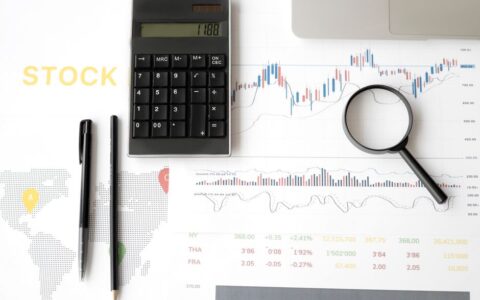


Staying invested through good years and bad usually builds more wealth than jumping in and out, because the market’s biggest gains tend to cluster in a handful of unpredictable days.

What “Timing the Market” Actually Asks You to Do
Market timing sounds simple: sell before prices fall, buy before they climb. In practice it demands two correct decisions instead of one. You have to exit near a peak and re-enter near a bottom, and you have to do both repeatedly, year after year, to stay ahead. A single mistimed move can erase the benefit of several good ones.
The problem is that the signals people rely on to make those calls — alarming headlines, gut feelings, a scary chart, a confident pundit — tend to peak in intensity right when emotions run highest. Fear is loudest near market bottoms, and optimism is loudest near tops. So the instinct to “wait until things calm down” often pushes you to sell after a decline and buy back after a rally, the exact opposite of the plan.
There is also a quieter cost: the cash you hold while waiting for a better entry point. Sitting in cash feels safe, but if the market drifts upward for months while you wait, you have already lost ground you may never recover. Being out of the market is itself a bet, one that pays off only if a decline arrives soon and you correctly act on it.
The Math of Missing the Best Days
Long-run stock returns are not spread evenly across time. Historically, a large share of the market’s gains arrives in short, concentrated bursts, often a small number of trading days scattered through any given decade. Those days are notoriously hard to predict, and many of them fall close to the worst days, during periods of high volatility that scare cautious investors to the sidelines.
This is why analyses of “missing the best days” are so striking. When researchers remove even a handful of the strongest sessions from a multi-decade period, the ending balance can fall dramatically compared with someone who simply stayed put the entire time. The investor who tried to dodge the bad days usually misses a chunk of the good ones too, precisely because they cluster together.
None of this guarantees any particular result. Past patterns are educational context, not a forecast, and your own timeline and risk tolerance matter a great deal. But the takeaway is durable: the cost of being absent for a few explosive rebounds tends to outweigh the benefit of sidestepping a downturn you probably could not have predicted anyway.
How Automatic Investing Quietly Tilts the Odds
You do not need a crystal ball to build wealth; you need a system that keeps buying regardless of the headlines. Contributing a fixed amount on a regular schedule — every paycheck, every month — is often called dollar-cost averaging. When prices are high your dollars buy fewer shares, and when prices are low they buy more, which smooths your average cost over time.
The deeper value is behavioral. Automating contributions removes the daily decision of whether “now” is a good moment, and it is exactly that repeated decision where timing errors creep in. A 401(k) that pulls money from each paycheck, or an IRA set to draft automatically, turns investing into a default rather than a judgment call you have to win over and over again.
Automation also keeps you buying during downturns, when discipline is hardest and future returns are often quietly built. If your employer offers a matching contribution, continuing through rough stretches protects money that is essentially part of your pay. How much to set aside depends on your budget, debts, and goals, so treat this as a general framework rather than a personal recommendation.
Where This Fits Inside 401(k)s, IRAs, and Roth Accounts
Time in the market and tax-advantaged accounts reinforce each other. Inside a traditional 401(k) or IRA, your investments grow without yearly taxes on gains and dividends, so staying invested lets compounding work on a larger, untaxed balance. Frequent trading in a taxable brokerage account, by contrast, can trigger short-term capital gains taxed at ordinary income rates — a direct penalty on hyperactive timing.
Roth accounts sharpen the point. Because qualified Roth withdrawals in retirement are generally tax-free, decades of uninterrupted growth are especially valuable there; every year you stay invested is another year of potentially tax-free compounding. Jumping out and missing a recovery inside a Roth means forfeiting growth you would never have owed taxes on in the first place.
These accounts also have rules that reward patience. Annual contribution limits mean you cannot simply dump a huge sum back in after a lucky exit, and early withdrawals can carry a 10% penalty plus taxes. The structure itself nudges you toward a long horizon. Specific limits and tax treatment change over time and vary by situation, so confirm current IRS figures and consider consulting a tax professional before acting.
Being Deliberate Without Trying to Time
Choosing not to time the market is not the same as ignoring it. There is a meaningful difference between reacting to short-term noise and maintaining a plan you set in calmer moments. Periodic rebalancing — resetting your mix of stocks and bonds back to your target once or twice a year — is a rules-based habit, not a prediction about what happens next.
Rebalancing can even feel counterintuitive in a useful way: it often means trimming what has run up and adding to what has lagged, enforcing “buy low, sell high” through a schedule instead of a hunch. Similarly, gradually shifting toward more conservative holdings as you approach a goal is about your changing time horizon, not a call on where prices are headed tomorrow.
Life events — a new job, a windfall, a shorter timeline for a specific goal — are legitimate reasons to revisit your allocation. What separates that from market timing is the trigger: your circumstances changed, not the day’s headlines. Keeping an emergency fund in cash so you are never forced to sell at a bad moment is part of the same discipline, and it is what lets you stay invested when others feel pressured to bail out.